

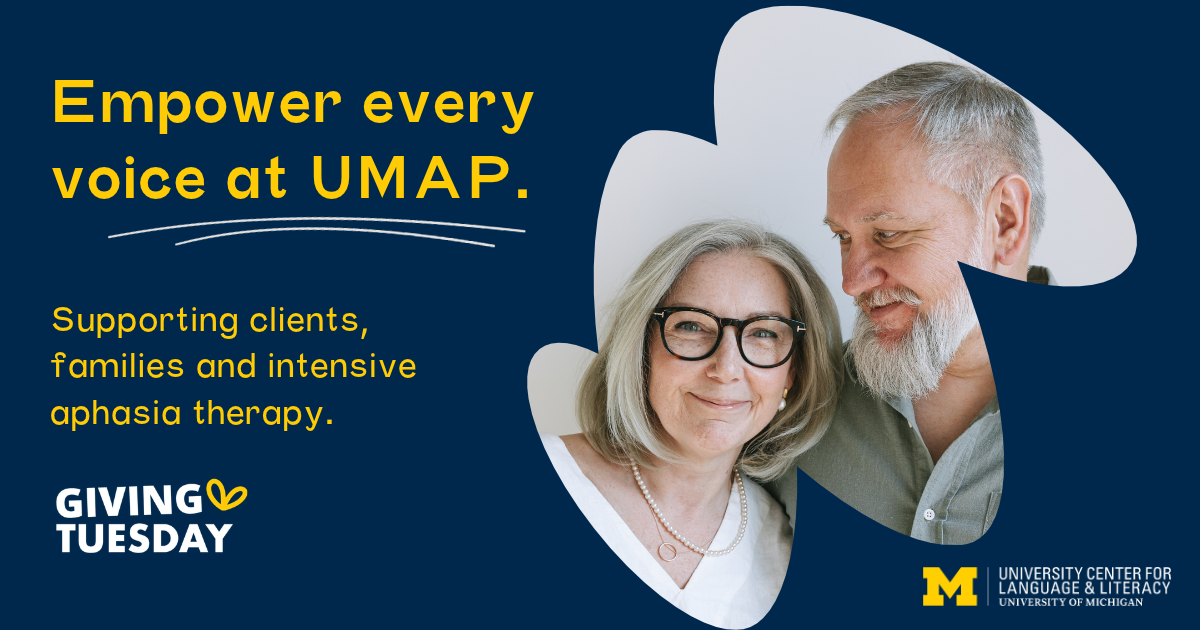
Aphaisia is a language disorder that can affect speech, comprehension, reading, or writing—most commonly occurring after a stroke, traumatic brain injury (TBI), or illness. While aphasia changes how someone processes and uses language, it does not change who they are, their intelligence, or their desire to connect with the world around them.
As the nation’s first Intensive Comprehensive Aphasia Program (ICAP), the University of Michigan Aphasia Program (UMAP) has spent decades setting the standard for speech and language intensive interventions. Standard outpatient speech therapy often offers just one or two hours of care per week. At UMAP, we take a different approach: our evidence-based, multi-week framework delivers 25 hours of specialized professional therapy each week, administered by licensed, certified speech-language pathologists (SLPs).
Through a customized blend of one-on-one therapy, group sessions, technology integration, and dedicated care partner support, we help individuals move beyond isolated exercises and achieve meaningful progress when they need it most.
How Your Support Makes a Tangible Impact
Gifts to our general campaign this Giving Tuesday provide flexible funds that directly enhance our program environment, clinical resources, and community reach.
Generous donor support enables us to fund vital tools and outreach initiatives that go beyond standard operations, including (but not limited to):
- Advanced Clinical & Interactive Technology: Funding specialized interactive tools to create engaging therapy sessions and practice environments for our clients.
- Community & Medical Outreach Kits: Creating educational inservice kits to train medical teams across Michigan Medicine and the broader community, raising awareness of aphasia and improving communication accessibility.
- Enriched Program Resources: Supporting specialized educational materials, technology learning tools, and care partner curriculum resources that help clients continue their progress long after completing their program.
Whether you give today in honor of a personal recovery journey or to enrich the experience for future families, we are grateful for your generosity.